Key Takeaways
- Don't choose SilverScript by name alone: plans differ in formulary, premium, and copays, so verify the exact plan available in your ZIP code using the Medicare Plan Finder.
- Check every prescription against the plan's current formulary, noting cost tiers and restrictions like prior authorization, step therapy, or quantity limits, and repeat this check each fall.
- Confirm your pharmacy is in network and whether it is a preferred pharmacy, since the same drug can cost noticeably more at the wrong location.
- Under 2026 rules, covered insulin is capped at $35 per month with no deductible, and ACIP-recommended adult vaccines have $0 cost sharing under Part D, so confirm which coverage applies before getting vaccinated.
- Once you reach the $2,100 out-of-pocket threshold, you pay nothing for covered Part D drugs for the rest of the year, but an expensive specialty drug can use up the deductible in a single fill.
- Review your full medication list with your primary care provider each year to catch coverage issues, duplicate drugs, and interactions, and to support prior authorization requests.
Choosing a prescription drug plan is one of the most important health decisions a Medicare beneficiary makes each year. Yet many people pick a plan based on the brand name alone. SilverScript, offered by Aetna, a CVS Health company, is one of the best-known names in Medicare Part D. But a familiar name does not guarantee that your medications, pharmacy, or budget will fit.
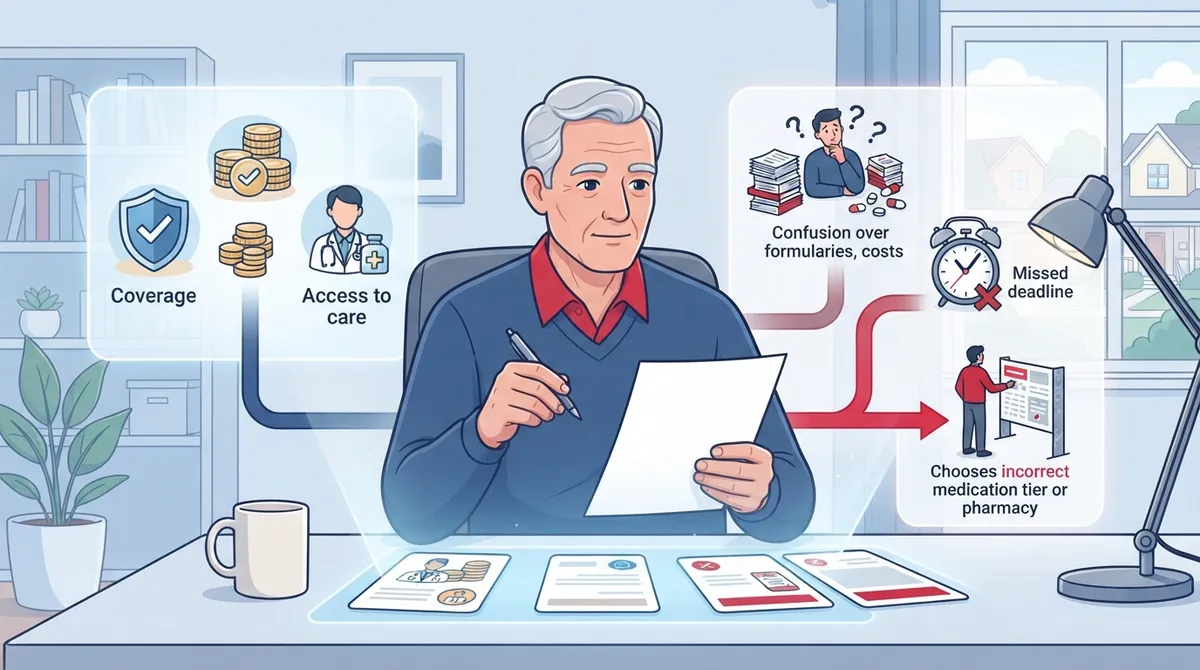
In 2026, the rules around Part D have changed in meaningful ways. There is now a $2,100 annual out-of-pocket threshold, capped insulin costs, and no cost sharing for many adult vaccines. These changes help, but only if you understand how they apply to your specific plan. A small mistake can lead to denied claims, surprise bills, or gaps in treatment for chronic conditions.
This guide covers 10 common SilverScript Medicare Part D mistakes and how to avoid each one. It also explains how your primary care team can help you protect your health and your wallet.
What Is SilverScript Medicare Part D?
SilverScript is a brand of Medicare Part D prescription drug coverage from Aetna. Its stand-alone prescription drug plans (PDPs) can be paired with Original Medicare. They help pay for covered outpatient prescription medicines. They do not replace Medicare Part A or Part B.
Plan details vary by location and by year. Premiums, deductibles, pharmacy networks, and formularies can all change. Always review the current plan documents and use the Medicare Plan Finder with your ZIP code and exact medication list before you enroll.

Quick Look: Key 2026 Part D Rules
|
2026 Part D Feature |
What It Means for You |
|---|---|
|
$2,100 annual out-of-pocket threshold |
After you reach this amount on covered drugs, you pay nothing for covered Part D drugs for the rest of the year. |
|
$615 standard deductible |
This is the standard figure from CMS. Individual plans may differ, and some have no deductible. |
|
Insulin cost cap |
Covered insulin is limited to the lesser of $35, or 25% of the applicable price, per month. The deductible does not apply. |
|
ACIP-recommended adult vaccines |
$0 cost sharing and no deductible when covered under Part D. |
|
Medicare Prescription Payment Plan |
Lets you spread out-of-pocket drug costs into monthly bills. It is voluntary and does not lower the total owed. |
Mistake 1: Choosing SilverScript by Name Alone
The name SilverScript tells you who runs the plan. It does not tell you what the plan covers. Several SilverScript plans exist, and each has its own formulary, premium, and copay structure.
As an example only, one 2026 SilverScript Choice Evidence of Coverage lists a $615 deductible. It also lists initial-stage cost sharing of $2 for preferred generics, $10 for generics, 19% for preferred brands, 35% for non-preferred drugs, and 25% for specialty drugs. These numbers are plan-specific. They are not universal SilverScript terms.
Always confirm the figures for the exact plan available where you live.
Mistake 2: Skipping the Formulary Check
A formulary is the list of drugs a plan covers. It is the most important document you will read. If your medication is not on it, you may pay full price or need an exception.
Before you enroll, do this:
- Write down every prescription, including dose and how often you take it.
- Search each drug on the plan's current formulary.
- Note the cost tier for each medication.
- Look for restrictions such as prior authorization, step therapy, or quantity limits.
- Repeat the check each fall, because formularies can change.
Do not assume a drug is covered because it was covered last year.
Mistake 3: Ignoring Your Pharmacy Network
Even a covered drug can cost more at the wrong pharmacy. Plans often have preferred pharmacies with lower copays. Mail-order options may also change your costs.
Confirm that your usual pharmacy is in network. Then check whether it is a preferred pharmacy. If you rely on a local pharmacy near Tampa or Riverview, ask about it directly before you commit to a plan.
Mistake 4: Overlooking Prior Authorization and Step Therapy
Some medications require approval before the plan will pay. This is called prior authorization. Step therapy means you must try a lower-cost drug first. These rules can delay treatment if you do not plan ahead.
This is where your primary care team becomes valuable. A doctor can submit the clinical details the plan needs. They can also suggest a covered alternative when appropriate. Good primary care helps prevent gaps in treatment, especially for chronic conditions.
Mistake 5: Forgetting That Costs Change Through the Year
Part D costs are not flat. You may pay a deductible first. Then you pay copays or coinsurance. Once you reach the $2,100 out-of-pocket threshold, the catastrophic phase begins. In that phase, you pay nothing for covered Part D drugs.
Many people are surprised by high costs early in the year. A costly specialty drug can use up the deductible in a single fill. Knowing the cost phases helps you plan your monthly budget.
Mistake 6: Not Using the Medicare Prescription Payment Plan
If large pharmacy bills strain your budget, you have an option. Every Part D plan must offer the Medicare Prescription Payment Plan. It spreads your eligible out-of-pocket costs into monthly bills instead of one large payment at the pharmacy.
Keep in mind that participation is voluntary. It does not reduce the total you owe. It only changes when you pay. Ask your plan how to opt in if cash flow is a concern.
Mistake 7: Missing Insulin and Vaccine Benefits
Two 2026 benefits are easy to overlook.
- Insulin: Covered insulin is capped at the lesser of $35, 25% of the applicable negotiated price, or 25% of the maximum fair price when applicable, per month. The deductible does not apply.
- Vaccines: Covered adult vaccines recommended by ACIP have $0 cost sharing under Part D, with no deductible.
Billing depends on whether a vaccine falls under Part D or Part B. Ask your provider before you get vaccinated so you know which coverage applies. This is especially useful for people managing diabetes. Learn more about avoiding common diabetes management mistakes.
Mistake 8: Treating Part D as a Replacement for Other Coverage
SilverScript stand-alone PDPs work alongside Original Medicare. They do not replace Part A or Part B. They also cannot always be combined with every plan type. If you are in a Medicare Advantage plan that already includes drug coverage, adding a stand-alone PDP may cause problems.
Before you change anything, confirm how your current coverage works. Our guide to what Medicare covers for seniors in primary care can help you sort out the basics.
Mistake 9: Missing Enrollment Deadlines
You can only enroll in or change a Part D plan during certain windows. The annual open enrollment period is the main chance to switch. Missing it can leave you stuck with a plan that no longer fits. Late enrollment may also bring a lifelong penalty added to your premium.
Mark your calendar each fall. Review your plan's Annual Notice of Change when it arrives. Then compare it with other options on the Medicare Plan Finder.
Mistake 10: Skipping Medication Review With Your Doctor
Many people never review their full medication list with a clinician. That is a missed chance. Medication reconciliation compares every drug you take against your plan's coverage and your health goals.
A primary care provider can spot duplicate drugs, flag possible interactions, and suggest lower-cost covered options. This review also supports continuity of care. For practical ideas, see these prescription management tips for better health in 2026.
InCare offers personalized primary care in Tampa and Riverview, Florida. Our team combines modern technology with hands-on medical expertise. We help patients line up their prescriptions, preventive care, and coverage so nothing falls through the cracks. You can meet our providers to see who might be the right fit for you.
How Primary Care Supports Your Part D Experience
Your drug plan covers medications. Your primary care team keeps you healthy enough to need fewer of them. Preventive care, early screenings, and chronic disease management all affect your long-term drug costs.
Here is how a strong primary care relationship helps with Part D:
- Medication reconciliation: Your doctor reviews all prescriptions and checks for coverage issues.
- Prior authorization support: Clinicians can document medical need and speak with the plan.
- Coordinated refills: Aligning refill dates reduces pharmacy trips and missed doses.
- Preventive care: Screenings and wellness visits catch problems early. See our overview of what happens during an annual wellness visit.
For many patients, how primary doctors help manage chronic illnesses is the key to keeping both health and costs under control.
A Simple Checklist Before You Enroll
- Gather your full medication list with doses.
- Use the Medicare Plan Finder with your ZIP code.
- Confirm each drug is on the formulary and note any restrictions.
- Verify that your pharmacy is in network and check its preferred status.
- Compare total yearly cost, not just the premium.
- Talk with your primary care provider about any needed changes.
Final Thoughts
SilverScript Medicare Part D can be a solid way to cover prescriptions, but only when the plan matches your needs. Avoiding these 10 mistakes protects you from surprise costs and treatment delays. The new 2026 rules, including the $2,100 out-of-pocket threshold, capped insulin costs, and $0 covered vaccines, make it a good time to review your options.
You do not have to sort this out alone. Our team at InCare is here to help you pair the right coverage with the right care. Read what patients say about us on Google when you visit us on Google — InCare, and follow our updates on Facebook, Instagram, and Tik Tok. For marketing insights on how healthcare brands reach patients, see Brain Buzz Marketing.
Ready to review your medications and build a care plan that works with your coverage? Book Now to schedule a visit, or contact our team with any questions.
FAQs
Q: What is SilverScript Medicare Part D, and who offers it?
A: SilverScript is a brand of Medicare Part D prescription drug coverage offered by Aetna, a CVS Health company. Its stand-alone prescription drug plans can be paired with Original Medicare to help pay for covered outpatient medications. Plan details vary by location and year.
Q: How much does SilverScript cost in 2026?
A: Costs vary by plan and location. The federal standard deductible is $615, though individual plans may differ, and the annual out-of-pocket threshold is $2,100. Check the current plan documents and the Medicare Plan Finder for exact premiums and copays.
Q: What are the 2026 insulin costs under Part D?
A: For covered Part D insulin, monthly cost sharing is limited to the lesser of $35, 25% of the applicable negotiated price, or 25% of the maximum fair price when applicable. The deductible does not apply to covered insulin.
Q: How can I check whether my prescriptions are covered?
A: Review the plan's current formulary and use the Medicare Plan Finder with your ZIP code and exact medication list. Also check for prior authorization, step therapy, or quantity limits, and confirm that your pharmacy is in network.
Q: How can a primary care provider help with SilverScript issues?
A: A primary care provider can reconcile your medications, support prior authorization requests, and suggest covered alternatives when needed. This coordination helps prevent treatment gaps and unexpected costs.