Key Takeaways
- Smoking cessation is the single most effective intervention for COPD patients, slowing lung function decline more than any medication; primary care providers can prescribe nicotine replacement therapy, varenicline, or bupropion with behavioral support.
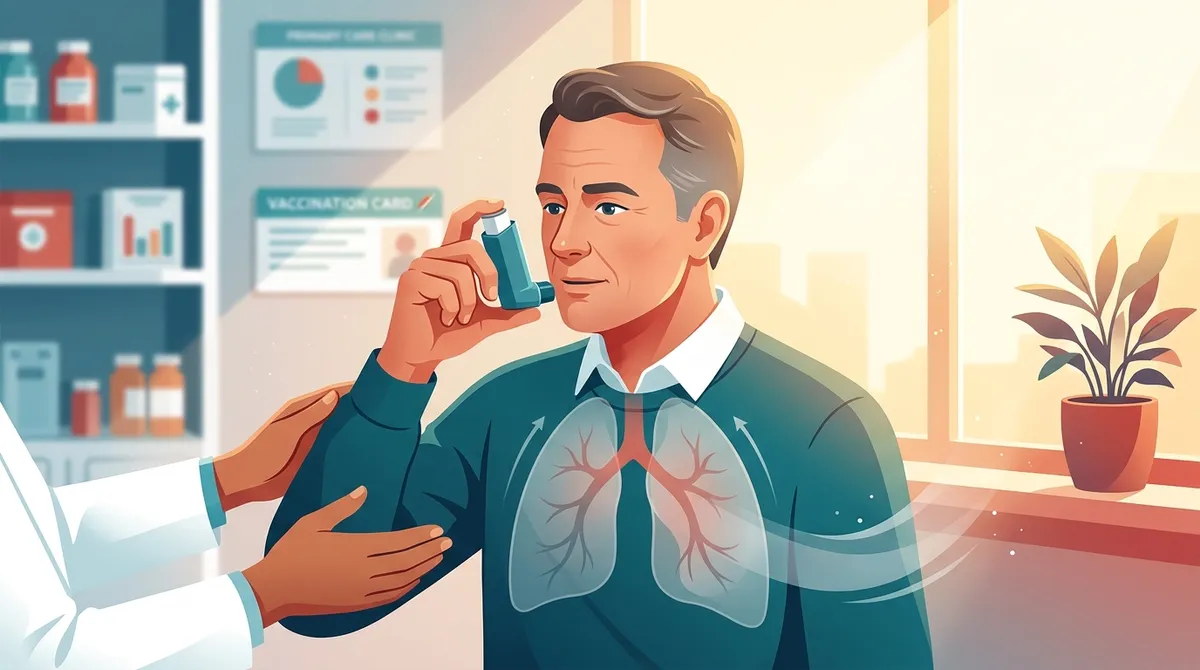
- Long-Acting Muscarinic Antagonists (LAMAs) are the cornerstone of stable COPD management, reducing breathlessness and flare-up frequency; proper inhaler technique is critical as poor technique significantly reduces medication effectiveness.
- Annual influenza vaccines and pneumococcal vaccines every 5-10 years are essential preventive strategies for COPD patients, as respiratory infections can trigger severe exacerbations leading to hospitalization and rapid lung function decline.
- Pulmonary rehabilitation combining supervised exercise, breathing techniques like pursed-lip breathing, and psychological support is one of the most effective non-drug interventions, improving exercise tolerance and emotional well-being.
- COPD exacerbations in primary care are treated with short-acting bronchodilators for rapid relief and a 7-10 day prednisone course at 30-40 mg daily, with close follow-up monitoring to prevent future episodes.
- Early diagnosis through spirometry testing and prompt treatment can significantly slow disease progression and lead to fewer hospitalizations; 36.4% of newly diagnosed COPD patients receive no respiratory medication within 90 days, highlighting treatment initiation gaps.
Chronic Obstructive Pulmonary Disease (COPD) affects more than 15 million Americans, with millions more living with the condition undiagnosed. If you or someone you love struggles with persistent coughing, shortness of breath, or frequent respiratory infections, COPD treatment through a primary care provider may be the most effective path forward. Managing COPD does not always require a specialist visit. In fact, most COPD care happens at the primary care level, where personalized treatment plans address the full picture of your health. From inhaler therapy and pulmonary rehabilitation to smoking cessation and vaccinations, today's primary care approach to COPD is comprehensive, evidence-based, and centered on you. Understanding your treatment options is the first step toward better breathing and a higher quality of life.

Understanding COPD and Why Early Treatment Matters
COPD is a chronic lung condition that causes airflow obstruction, making it progressively harder to breathe. It includes chronic bronchitis and emphysema, and it is most commonly caused by long-term exposure to cigarette smoke or environmental pollutants. Early diagnosis and treatment can significantly slow the progression of the disease.
Primary care providers are often the first point of contact for patients experiencing COPD symptoms. They are equipped to diagnose COPD using spirometry testing, create individualized care plans, and coordinate ongoing management. Early intervention leads to fewer hospitalizations, better symptom control, and improved overall well-being.

First-Line COPD Treatment Options in Primary Care
Primary care providers use a combination of medications and lifestyle strategies to manage COPD. The goal is to reduce symptoms, prevent exacerbations, and improve daily function. Treatment is tailored to each patient based on the severity of their condition and overall health profile.
Bronchodilator Therapy
Long-acting bronchodilators are the cornerstone of stable COPD management. Long-Acting Muscarinic Antagonists (LAMAs) are widely considered the primary maintenance therapy for most patients. They work by relaxing the muscles around the airways, making it easier to breathe. These medications reduce breathlessness, decrease the frequency of flare-ups, and improve quality of life.
Over time, research has shown a shift in prescribing patterns. Long-Acting Beta-Agonist (LABA) monotherapy increased from 2.6% in 2010 to 5.7% in 2021 among initial treatments in primary care settings, reflecting evolving evidence-based guidelines. Your provider will recommend the most appropriate bronchodilator based on your specific COPD severity and health history.
Inhaled Corticosteroids
For patients with frequent exacerbations or overlapping asthma features, inhaled corticosteroids (ICS) may be added to bronchodilator therapy. These medications reduce airway inflammation and are typically prescribed as combination inhalers. Patient education on proper inhaler technique is critical, as poor technique significantly reduces medication effectiveness.

Pharmacological vs. Non-Pharmacological COPD Treatment
Effective COPD treatment blends medication with lifestyle-based strategies. The table below summarizes the key approaches used in primary care settings.
Treatment Type Examples Primary Benefit Long-Acting Bronchodilators LAMAs, LABAs Reduce airflow obstruction and breathlessness Inhaled Corticosteroids Fluticasone, Budesonide Decrease airway inflammation and exacerbations Smoking Cessation Nicotine replacement, Varenicline Slows disease progression most effectively Pulmonary Rehabilitation Exercise, breathing techniques Improves endurance and reduces symptoms Vaccinations Influenza, Pneumococcal Prevents respiratory infections and exacerbations Oxygen Therapy Supplemental oxygen Supports severe cases with low blood oxygen

The Role of Smoking Cessation in COPD Management
Smoking cessation is the single most important intervention for COPD patients who smoke. Quitting smoking slows the rate of lung function decline more effectively than any medication. For patients who need support, primary care providers can prescribe evidence-based cessation aids.
Common cessation tools used in primary care include:
- Nicotine replacement therapy (patches, gum, lozenges)
- Prescription medications such as varenicline or bupropion
- Behavioral counseling and support programs
- Follow-up appointments to monitor progress and adjust plans
- Combination therapy for patients with stronger dependence
Your primary care provider will help you select the right combination of tools to support a successful quit attempt, which is a cornerstone of long-term COPD treatment success.
Vaccinations Recommended for COPD Patients
Respiratory infections can trigger severe COPD exacerbations, leading to hospitalization and rapid lung function decline. Vaccinations are a critical preventive strategy for all COPD patients. Primary care providers routinely recommend and administer the following:
Vaccine Frequency Why It Matters for COPD Influenza (Flu) Annually Reduces respiratory exacerbations linked to flu Pneumococcal Every 5-10 years Prevents pneumonia, a common COPD complication COVID-19 As recommended Reduces severe respiratory illness risk Tdap/Td Every 10 years Protects against pertussis (whooping cough)
Pulmonary Rehabilitation and Its Benefits
Pulmonary rehabilitation is a structured program combining exercise training, education, and support. It is one of the most effective non-drug interventions for COPD. Patients who complete pulmonary rehabilitation experience reduced breathlessness, improved exercise tolerance, and better emotional well-being.
Key components of a pulmonary rehabilitation program include:
- Supervised aerobic and strength exercises tailored to the patient's fitness level
- Breathing techniques such as pursed-lip and diaphragmatic breathing
- Nutritional guidance to support overall lung health
- Education on COPD self-management and recognizing warning signs
- Psychological support to address anxiety and depression related to breathing difficulties
Primary care providers coordinate referrals to pulmonary rehabilitation programs and track patient progress over time. If you want to understand how chronic illness management works in a primary care setting, explore how primary doctors help manage chronic illnesses.
Managing COPD Exacerbations in Primary Care
A COPD exacerbation is a sudden worsening of symptoms, often triggered by a respiratory infection or environmental exposure. Primary care providers are trained to identify and treat exacerbations quickly to prevent hospitalization.
Steps for Treating COPD Exacerbations
- Assess severity: The provider evaluates oxygen saturation, breathing rate, and symptom intensity to determine the level of care needed.
- Order imaging if needed: Chest radiographs can alter the management approach in up to 20% of outpatient COPD exacerbations.
- Prescribe short-acting bronchodilators: These provide rapid airway relief during an acute episode.
- Administer a course of corticosteroids: A 7-10 day course of prednisone at 30-40 mg per day is commonly recommended unless contraindicated.
- Consider antibiotics: If the exacerbation is triggered by a bacterial infection, antibiotics may be prescribed.
- Schedule close follow-up: Post-exacerbation monitoring ensures recovery and helps prevent future episodes.
It is worth noting that 36.4% of newly diagnosed COPD patients in a large primary care study received no respiratory medication within 90 days of diagnosis, highlighting the importance of proactive and timely treatment initiation.
Oxygen Therapy for Advanced COPD
For patients with severely low blood oxygen levels (hypoxemia), supplemental oxygen therapy may be prescribed. Long-term oxygen therapy is recommended when resting oxygen saturation falls below a certain threshold as determined by your provider. It can reduce strain on the heart, improve mental clarity, and support daily physical activity.
Primary care providers assess oxygen needs through pulse oximetry and arterial blood gas testing. They also coordinate home oxygen equipment and monitor therapy effectiveness over time. When COPD advances beyond primary care management capacity, referral to a pulmonologist ensures seamless, coordinated care.
COPD Treatment Plan: What to Expect
A well-structured COPD treatment plan created by a primary care provider typically includes the following elements:
- Diagnosis confirmation: Spirometry testing to measure lung function and classify COPD severity.
- Medication prescription: Selection of appropriate inhalers and other pharmacological therapies.
- Lifestyle modification guidance: Recommendations for smoking cessation, exercise, and nutrition.
- Preventive care integration: Vaccination updates and regular screenings to catch complications early.
- Patient education: Training on inhaler technique, recognizing exacerbation signs, and self-management strategies.
- Ongoing monitoring: Regular follow-up visits to reassess lung function and adjust treatment as needed.
How InCare Supports COPD Patients in Tampa and Riverview
InCare is a personalized primary care and wellness clinic serving Tampa and Riverview, Florida. With a patient-centered approach and state-of-the-art technology, InCare's experienced providers create individualized COPD treatment plans that address both symptoms and overall health. Whether you are managing a recent diagnosis or looking for a more coordinated approach to long-term lung health, InCare's team is equipped to guide you. You can learn more about the skilled providers at InCare by visiting the providers page, and explore convenient clinic locations in Tampa and Riverview.
InCare holds a 4.8 out of 5 star rating on Google with over 359 patient reviews. Visit InCare on Google to read what patients say about their care experience. You can also follow InCare's health updates and wellness tips on Facebook, Instagram, and TikTok for the latest content on respiratory health and prevention.
Comparing COPD Severity Levels and Treatment Approach
COPD Stage Symptoms Typical Primary Care Treatment Mild (GOLD 1) Occasional cough, minimal breathlessness SABA inhaler, smoking cessation, vaccinations Moderate (GOLD 2) Increased shortness of breath, activity limitation LAMA or LABA, pulmonary rehabilitation referral Severe (GOLD 3) Frequent exacerbations, significant limitations Combination inhaler therapy, ICS, oxygen assessment Very Severe (GOLD 4) Chronic respiratory failure, poor quality of life Oxygen therapy, specialist coordination, palliative support
Tips for Better COPD Self-Management at Home
Self-management is a vital part of COPD treatment. What you do between medical appointments has a direct impact on how well your lungs function day to day. Here are key strategies to support your treatment plan:
- Use your inhalers exactly as prescribed and practice proper technique at every dose
- Avoid smoke, air pollution, dust, and chemical fumes that can irritate the airways
- Stay physically active with low-impact exercises like walking or swimming
- Eat a balanced diet to maintain a healthy weight and support respiratory muscle strength
- Monitor your symptoms daily and contact your provider at the first sign of worsening
- Attend all follow-up appointments and stay current on recommended vaccinations
If you are looking for broader preventive health support alongside your COPD care, consider exploring InCare's cancer screening services and metabolic breath analysis for a comprehensive view of your health. Additionally, patients interested in understanding how their genetics influence respiratory health may benefit from DNA gene testing.
Conclusion
COPD treatment in a primary care setting is both effective and deeply personalized. From bronchodilator therapy and smoking cessation to pulmonary rehabilitation and vaccination, primary care providers have the tools to help you manage COPD with confidence. Early diagnosis, consistent follow-up, and patient education are the pillars of a successful long-term care plan. You do not have to face COPD alone. A skilled primary care team can guide you toward better breathing and a more active life. If you are ready to take the next step in managing your COPD, schedule your appointment with InCare today and start your personalized treatment journey with a team that puts your health first.
FAQs
Q: What are the first-line treatments for COPD in primary care?
A: The first-line treatment for stable COPD is a long-acting bronchodilator, typically a Long-Acting Muscarinic Antagonist (LAMA). Primary care providers also recommend smoking cessation, annual influenza vaccinations, and pulmonary rehabilitation as essential components of a comprehensive COPD care plan.
Q: When should oxygen therapy be considered for COPD patients?
A: Supplemental oxygen therapy is typically recommended when a patient's resting blood oxygen saturation drops below clinically established thresholds, as determined by pulse oximetry or arterial blood gas testing. A primary care provider will assess oxygen needs during routine monitoring and adjust therapy accordingly.
Q: How are COPD exacerbations treated in a primary care setting?
A: Primary care providers treat COPD exacerbations with short-acting bronchodilators for immediate relief, and a 7-10 day course of prednisone at 30-40 mg per day is commonly prescribed unless contraindicated. Antibiotics may be added if a bacterial infection is identified as the trigger.
Q: What role does smoking cessation play in COPD management?
A: Smoking cessation is the single most impactful intervention for COPD patients who smoke, as it slows the rate of lung function decline more effectively than any medication. Primary care providers can prescribe nicotine replacement therapy, medications like varenicline, and behavioral counseling to support successful cessation.
Q: What vaccines are recommended for people with COPD?
A: Patients with COPD are advised to receive an annual influenza vaccine and a pneumococcal vaccine every 5-10 years to reduce the risk of respiratory infections that can trigger dangerous exacerbations. COVID-19 and Tdap booster vaccinations are also recommended as part of routine preventive care.